
What Homeowners Should Know Before Choosing a Metal Roof
When you start exploring new roofing options, you’ll quickly discover that metal roofing is no longer limited to barns, industrial buildings, or rural cabins. Today’s metal roofs come in a wide range of designs, colors, textures, and profiles, making them an excellent choice for almost any home. Whether you’re replacing an old asphalt shingle roof, planning a remodel, or just researching what’s out there, understanding the different metal roofing types will help you make an informed decision.
Metal roofing materials like aluminum, steel, zinc, and copper have earned a reputation for strength, longevity, and energy efficiency. Combine that with modern engineering, fire resistant design, and curb-appeal friendly styles, and it’s easy to see why residential metal roof types continue to grow in popularity across the Northwest.
This guide walks through the most common metal roof types, how they compare to traditional roofing like asphalt shingles, and what homeowners should know about price point, pros and cons, and long-term performance.
What Are the Most Common Types of Metal Roofing?
 Metal roofs come in several major categories, each designed to serve different needs, budgets, and architectural styles. While many homeowners start by comparing standing seam metal roofing and metal shingles, there are additional materials and profiles worth considering.
The most common metal roofing option for residential homes includes:
- Standing seam roofs
- Metal shingles and shake profiles
- Corrugated metal roofing
- Premium materials like copper roofing and zinc roofing
- Aluminum roofing and steel roofing panels
Each offers a unique combination of durability, appearance, and weather performance. Understanding these differences will help you choose the right fit for your home.
How Does Standing Seam Metal Roofing Work?
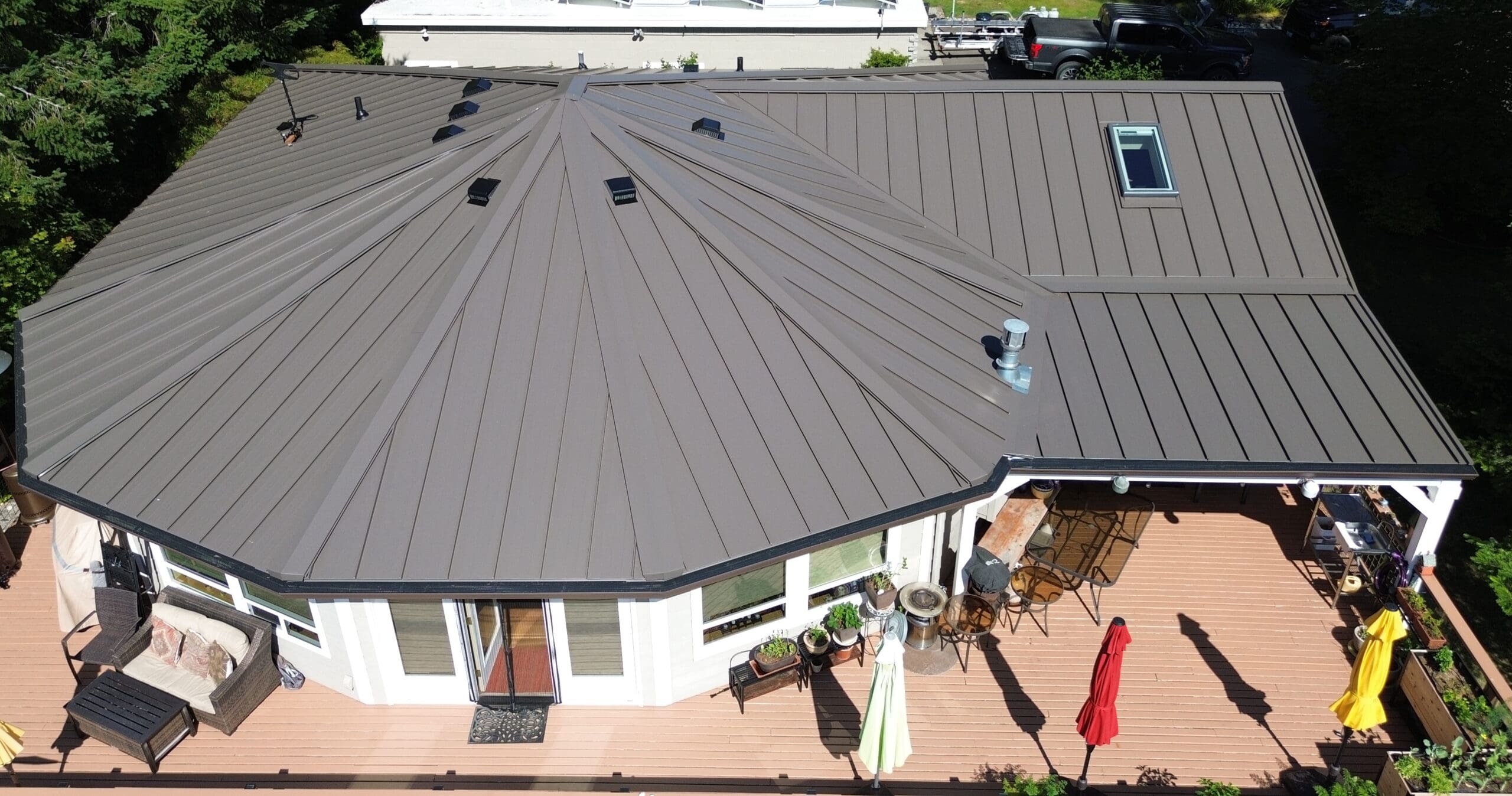
Standing seam is one of the most recognizable and widely installed residential metal roof types. These roofs use tall vertical panels with raised seams that lock together to create a watertight barrier. Because the fasteners are concealed beneath the panels, standing seam roofs avoid one of the biggest challenges of traditional metal panels: exposed fasteners.
Homeowners choose standing seam metal roofing because it is:
- Highly weather-resistant
- Low maintenance
- Strong in high winds and heavy rain
- Sleek, modern, and architecturally clean
It’s also one of the longest-lasting systems available. When professionally installed, standing seam panels can perform for more than 50 years with very little upkeep. While the price point is typically higher than other metal roofing option styles, the longevity, energy performance, and modern look make it a smart long-term investment.
What Makes Metal Shingles a Popular Choice for Homes?
If you love the traditional look of shingle roofing but want something more durable than asphalt shingles, metal shingles are an excellent choice. They mimic the familiar shape and texture of standard shingles but use steel or aluminum roofing for dramatically improved performance.
Metal shingle roofs offer:
- A classic appearance suited to almost any home
- Low maintenance
- Strong wind and fire resistance
- Long-term value with lifespans of 40–50+ years
Because metal shingles blend well with traditional roofing styles, they are especially popular in neighborhoods with established architectural character. Although the installation may be more specialized than asphalt shingles, the extended durability usually outweighs the added complexity.
What About Metal Shake Roofing?
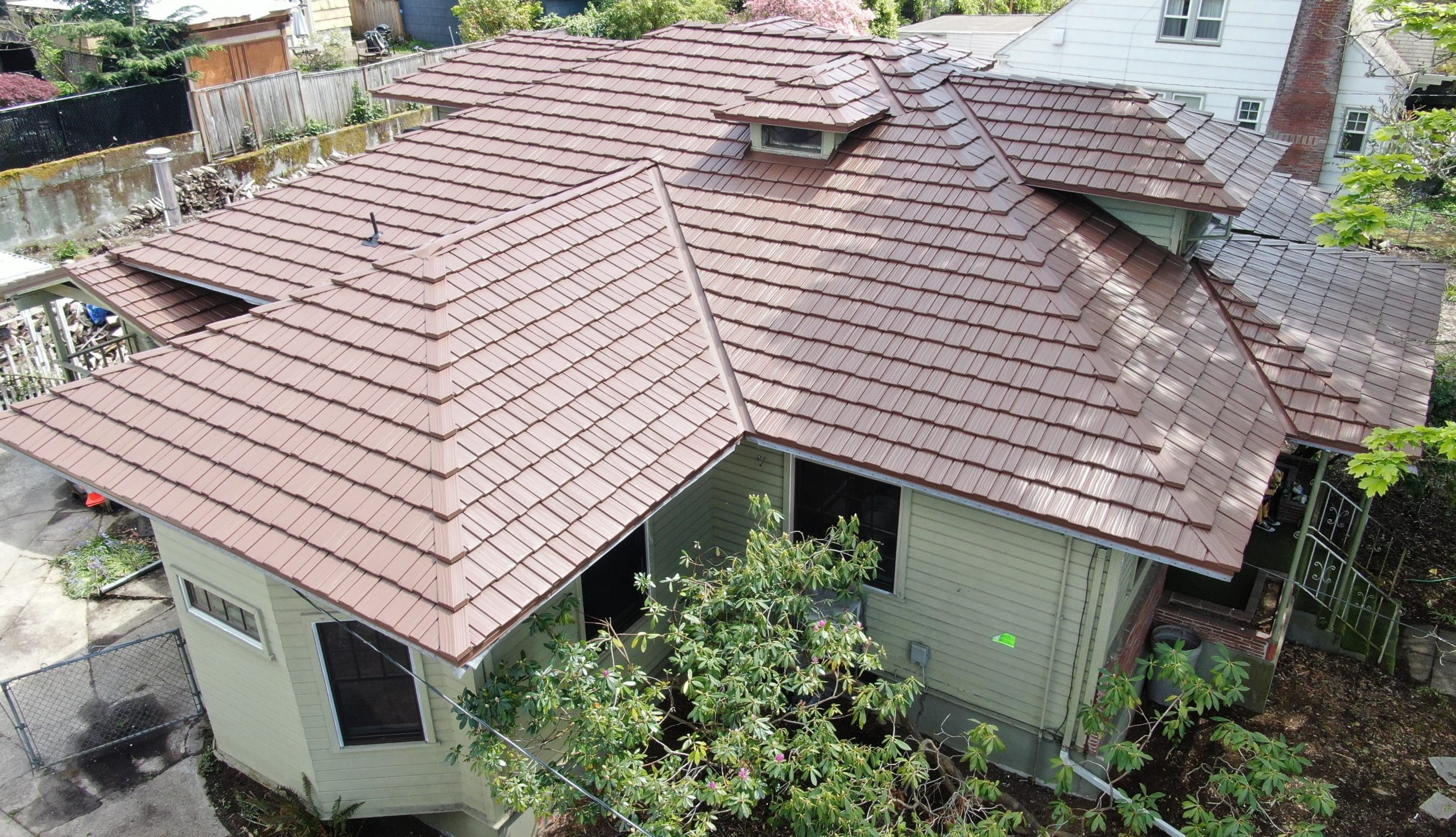 Metal shakes are designed to look like cedar shake shingles without the constant upkeep. Cedar shake roofs are beautiful but vulnerable to moisture, insects, mold, and fire. Metal shake profiles solve these issues by using steel or aluminum panels formed to resemble natural wood grain.
Why homeowners choose metal shakes:
- The rustic charm of real cedar
- A fire resistant and insect-proof surface
- Long service life compared to organic shakes
- Better performance in wet Northwest climates
Metal shakes are especially helpful for homeowners who love the natural look of cedar but want a roof that lasts significantly longer and requires almost no maintenance.
How Does Corrugated Metal Roofing Compare?
Corrugated metal roofing features a wave-like pattern that adds structural rigidity to thin metal panels. This profile used to be associated primarily with barns and industrial buildings, but it can also appear in residential applications when used thoughtfully.
Corrugated panels offer:
- Lightweight construction
- Simple installation
- Strong weather performance
- A budget-friendly price point
However, corrugated panels often have exposed fasteners, which creates more potential maintenance over the years. Because the screws are visible and sit above the panel, they may need tightening or replacing as the roof expands and contracts with temperature changes. Still, corrugated metal roofing remains popular for accent roofs, sheds, lean-tos, and certain modern home designs.
What Are the Differences Between Aluminum, Steel, Copper, and Zinc Roofing?
Beyond roof profiles, you’ll also choose the metal itself. Each metal roofing material offers unique advantages and considerations.
Aluminum Roofing
Aluminum is lightweight, corrosion-proof, and an excellent choice near coastal environments. It resists salt, humidity, and rust far better than steel. Aluminum roofing is also highly reflective, helping homes stay cooler in summer.
Steel Roofing
Steel roofing is strong, cost-effective, and widely available. It comes in several coatings—such as galvanized or galvalume—to resist corrosion and improve durability. Painted steel panels can even mimic shingle roofing, slate, or tile.
Copper Roofing
Copper roofing is known for its premium appearance and unmatched longevity. Over time, copper develops a natural green patina that enhances its beauty and provides extra protection. Copper is one of the most expensive metal roofing materials, but it can last more than a century.
Zinc Roofing
Zinc roofing is incredibly durable, self-healing, and fully recyclable. It forms a protective patina that helps prevent corrosion and makes small scratches disappear over time. It’s eco-friendly, long-lasting, and visually striking—ideal for high-design homes.
How Do Metal Roof Types Compare to Asphalt Shingles?
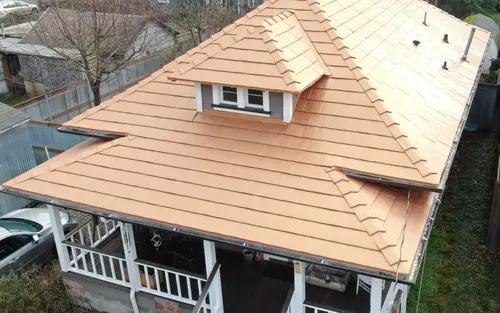 Many homeowners start with an asphalt roof but consider switching when it’s time to replace it. Asphalt shingles are inexpensive upfront, but they typically last only 15–20 years and may require repairs from moss, wind, and heat damage.
Metal roofs outperform asphalt shingles in several key areas:
- Longevity: 40–70+ years depending on the material
- Durability: Resistant to cracking, curling, and rot
- Fire resistance: Metal roofing materials do not combust
- Weather performance: Better against wind, rain, and debris
- Energy efficiency: Reflective coatings help balance indoor temperatures
- Lower lifetime cost: Fewer replacements and less maintenance
While asphalt shingles have a lower upfront price point, metal roofing often becomes more cost-effective over time due to its long service life and lower maintenance needs.
What Are the Pros and Cons of the Different Metal Roof Types?
Every metal roof type has strengths and considerations. Here’s a condensed, homeowner-friendly comparison:
Standing Seam Roofs
Pros: Long-lasting, concealed fasteners, excellent in harsh weather, modern look. Cons: Higher upfront cost, requires professional installation
Metal Shingles
Pros: Traditional look, durable, fire resistant, blends with most neighborhoods. Cons: Installation is more specialized than asphalt shingles
Metal Shakes
Pros: Rustic appearance, low upkeep, fire resistant, lifetime performance. Cons: Higher cost compared to standard asphalt
Corrugated Metal Roofing
Pros: Budget-friendly, lightweight, easy to install. Cons: Exposed fasteners require periodic maintenance.
Copper Roofing
Pros: Prestigious appearance, extremely long lifespan, natural patina. Cons: Premium price point
Zinc Roofing
Pros: Eco-friendly, self-healing patina, highly durable. Cons: Higher cost than steel or aluminum
Steel Roofing
Pros: Affordable, versatile, strong, available in many styles. Cons: Can rust without proper coatings
Aluminum Roofing
Pros: Corrosion-proof, coastal-ready, lightweight. Cons: Higher cost than steel in some cases
How Do I Choose the Best Metal Roof for My Home?
 With so many different types of metal roofing available, choosing the right one may feel overwhelming. Homeowners often start by weighing four key factors:
- Budget and long-term value
- Architectural style and curb appeal preferences
- Climate and environmental exposure
- Desired lifespan and maintenance level
For example, if you want a sleek, modern look with strong weather resistance, standing seam is an excellent choice. If you prefer traditional roofing with better durability than asphalt shingles, metal shingles or metal shake profiles may fit better. For coastal homes, aluminum roofing offers ideal performance, while copper or zinc roofing delivers unmatched longevity for premium projects.
A qualified contractor can evaluate your home’s structure, slope, and location to recommend the best metal roofing option.
Frequently Asked Questions About Metal Roof Types
Are metal roofs fire resistant?
Yes. Metal panels do not ignite, making them a strong choice in areas prone to wildfire or lightning.
Do metal roofs make homes hotter?
No. Many standing seam roofs and metal panels use reflective coatings that reduce heat absorption.
Are metal roofs noisy during rain?
With proper underlayment and attic insulation, metal roofs are no louder than traditional roofing.
Can I walk on a metal roof?
In many cases, yes, but only with proper technique. Always ask your roofing contractor before attempting it.
Do metal roofs work with solar panels?
Absolutely. Metal roofing is one of the best surfaces for solar installations because of its longevity and structural integrity.
Ready to Explore the Best Metal Roofing Option for Your Home?
Choosing the right metal roof type is easier when you work with experts who understand the materials, installation techniques, and long-term performance homeowners expect. Mountaintop Metal Roofing specializes in aluminum roofing and high-quality metal roof systems engineered for Northwest weather.
If you’re ready to compare standing seam roofs, metal shingles, corrugated metal roofing, or premium materials like zinc and copper, we’re here to help.
Contact Mountaintop Metal Roofing today for a no-pressure, free quote and discover which residential metal roof type fits your home, your style, and your long-term goals.