
Key Takeaways
- PNW roofs face relentless rain, high humidity (moss/algae), and seasonal windstorms.
- Metal roofing is the gold standard, lasting 50–70 years and resisting moss growth entirely.
- Architectural asphalt shingles are the most common but require more frequent maintenance and replacement.
- Porous materials like wood shakes and asphalt shingles are prone to rot and moss in damp climates like Seattle and Portland.
- Aluminum and copper metal roofing from Mountaintop Metal Roofing offers a lifetime, transferable warranty, making it the final roof your home will ever need.
Living in the Pacific Northwest means your home is under constant siege from the elements. Between the “Big Dark” winters, damp spring mornings, and increasingly hot summers, it’s no secret that your roof takes most of those hits.
So, how do you protect your roof and your home from costly leaks, mold, and structural damage? In this guide, we’ll break down the most popular roofing types for our region and help you decide which investment makes the most sense for your home.

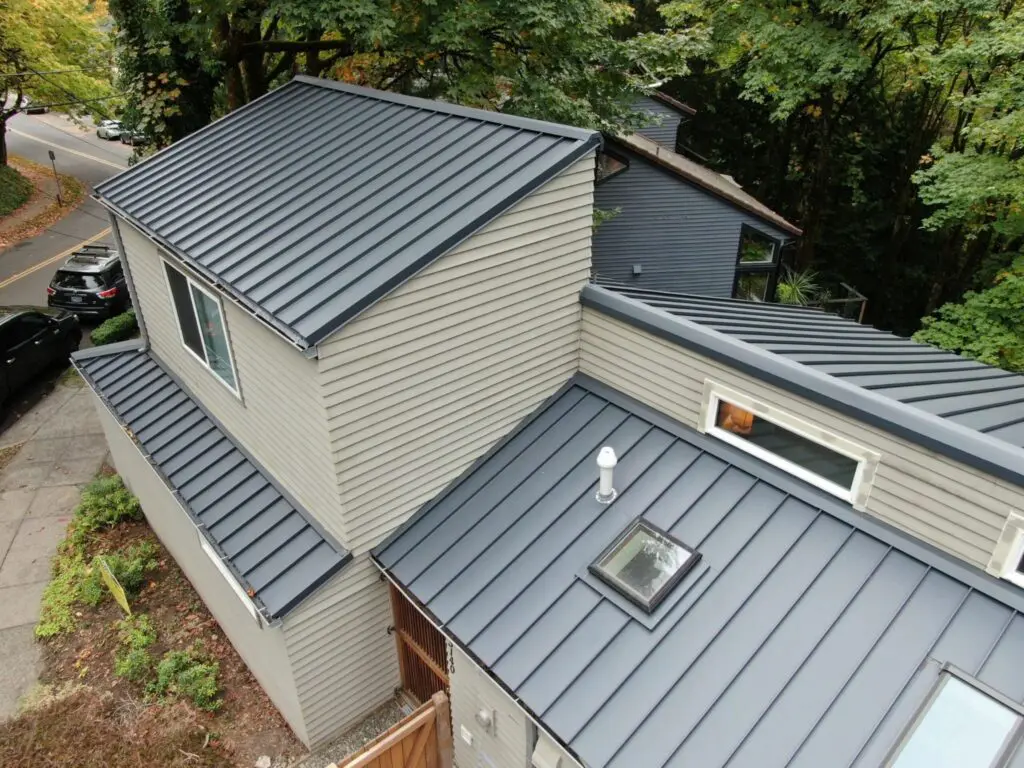
1. Metal Roofing
If you’ve lived in the Pacific Northwest for more than a single winter, you know the sound of that relentless, gray drizzle. Most roofing materials (like asphalt or wood) stay damp for months on end. They act like a sponge, and in our neck of the woods, a damp sponge is an open invitation for moss.
We call metal the “Lifetime Leader” because it’s the only material that actually plays offense against PNW weather. It’s moved out of the industrial world and onto the most beautiful homes in Washington and Oregon for one simple reason: it’s the only roof that lets you stop worrying.
The Pros of Metal Roofing for PNW Homes
- The Moss-Free Guarantee: In the South, they worry about sun damage; here, we worry about “roof killers”, that thick, green moss that roots into your shingles and pries them apart. Metal is completely non-porous. Moss can’t find a foothold, meaning you can finally retire that ladder and stop spraying harsh chemicals on your roof every spring.
- Instant Shedding: Metal doesn’t “hold” weight, so water and snow slide right off, keeping the load off your home’s structure and ensuring moisture never has a chance to seep into your attic.
- Fire & Wind Resistance: With wildfire seasons becoming a serious concern for us, having a Class A fire-rated roof means everything. Plus, while high winds often peel back asphalt shingles like a banana, our interlocking metal panels stay locked tight.
The “Elephant in the Room”: The Cost
We’ll be the first to tell you: the upfront investment for a high-quality aluminum or copper roof is higher than that of an asphalt roof. Sure, it’s a bigger check to write today, but here is the perspective we share with our customers: Asphalt is a subscription; metal is a solution.
When you factor in that an asphalt roof in the PNW usually needs professional cleaning every two years and a full replacement every 15 to 20 years, the “cheaper” roof actually ends up being the most expensive thing you’ll ever buy. With our metal systems, you pay for your roof exactly once. You do it right, you get a transferable lifetime warranty, and you never have to think about your roof again, unless it’s to admire how good it looks while the neighbors are out scrubbing moss off theirs.

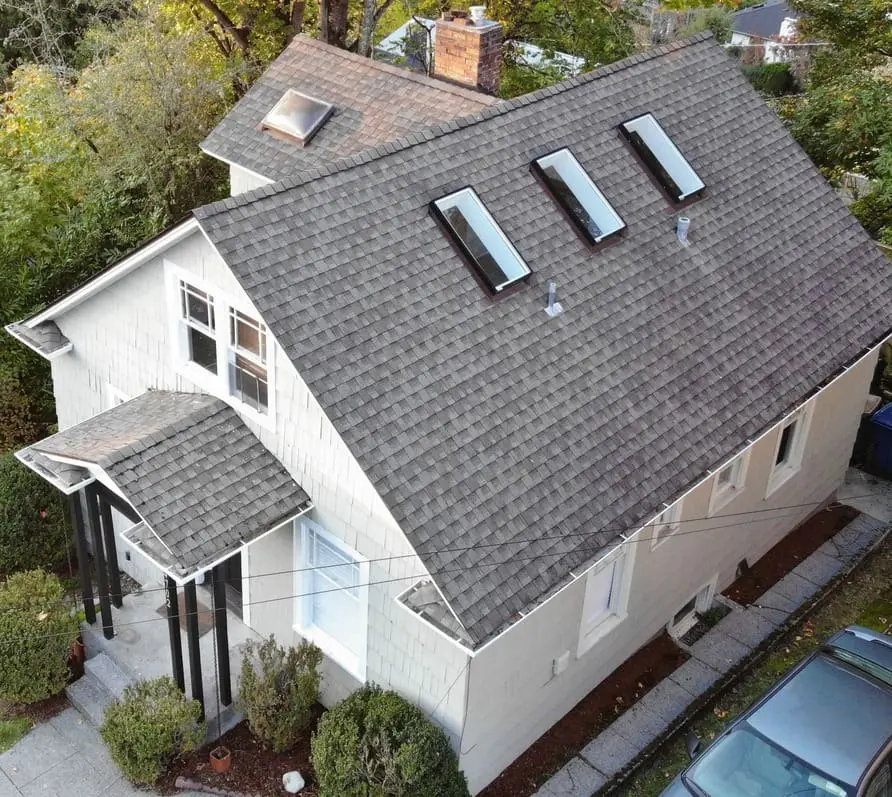
2. Architectural Asphalt Shingles
Walk down any street in a PNW suburb, and you’ll see asphalt shingles everywhere. They are the “standard” for a reason. Modern architectural shingles (sometimes called dimensional or laminate shingles) are a massive step up from the paper-thin, flat 3-tab shingles your parents might have had. They’re thicker, they look more like natural slate or wood, and they handle our seasonal windstorms with decent grace.
However, in a climate as damp as ours, there’s a bit more to the story than just a low price tag.
Some Downsides to Asphalt Shingles
- The Algae Battle: Because the Northwest is basically a giant greenhouse, asphalt manufacturers started adding copper granules to their shingles. These are designed to kill algae before it turns your roof black. It helps, but it’s not a permanent shield. Over time, those granules wash away, and the algae (and eventually the moss) will come knocking.
- The “Sponge” Effect: Asphalt is a porous, petroleum-based product. It holds onto moisture. In cities like Seattle or Portland, where it can stay misty for ten days straight, that moisture seeps into the shingle. This leads to a shorter lifespan here than in, say, Arizona. While a package might say “30-year warranty,” in PNW “real-world years,” you’re often looking at a 15- to 20-year window before things start looking rough.
The Trade-Off: Savings vs. Service Life
The biggest “pro” is undeniably the cost. If you’re looking to freshen up a home before putting it on the market, or if you’ve had a sudden leak and need a reliable fix that doesn’t break the bank, architectural shingles are a solid, practical choice. They are easy to find and quick to install.
But here’s a little piece of advice: budget for the upkeep. If you go with asphalt in Washington or Oregon, you have to stay on top of it. You’ll need to clear off the pine needles and leaves every autumn and keep a sharp eye out for that first hint of green fuzz. Once moss gets under the lip of an asphalt shingle, it starts lifting it, creating a direct path for water to hit your roof deck.

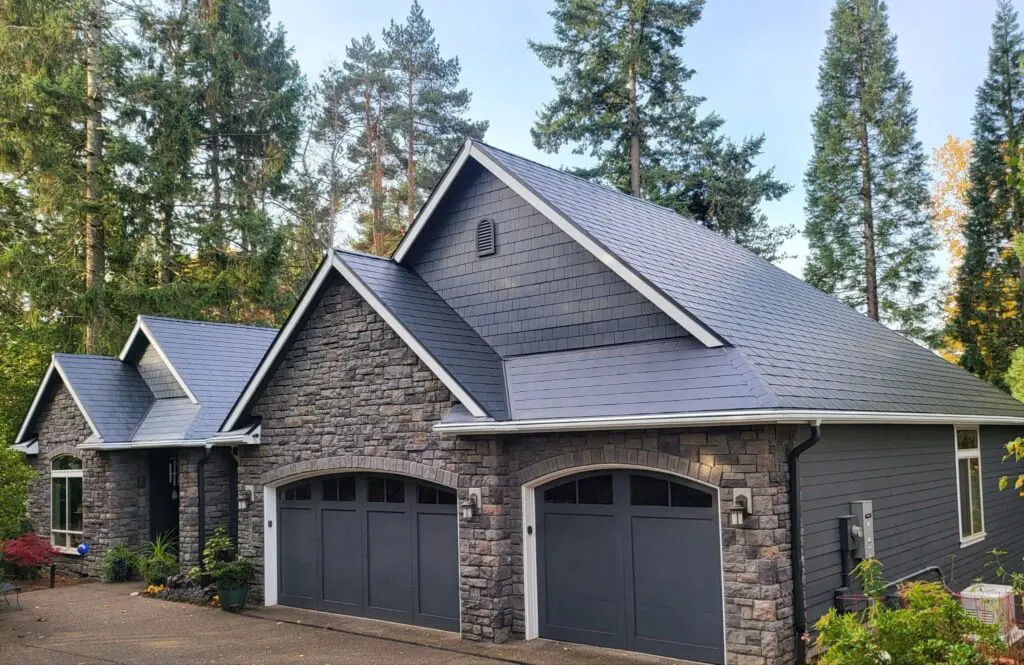
3. Synthetic Slate & Shake
If you’ve ever walked past a stunning historic home in the North End or a rustic lodge in the Cascades and thought, “I love that look, but I hate the idea of the maintenance,” synthetic roofing was designed for you. It’s the “best of both worlds” option, mimicking the heavy, prestigious look of natural slate or the rugged charm of cedar shake, but engineered in a lab to survive a PNW rainforest.
In a region where natural wood eventually rots, and real slate can be too heavy for many standard home frames, synthetic (or composite) roofing has become a favorite for high-end upgrades.
- Rot? Never Heard of It: Natural cedar is beautiful, but in Washington and Oregon, it’s essentially slow-burning fuel and a buffet for mold. Synthetic shakes are made from advanced polymers and recycled rubbers. They don’t absorb water, they don’t warp in the humidity, and they certainly don’t rot.
- The Weight Advantage: Real slate is gorgeous, but it’s incredibly heavy. Most PNW homes require expensive structural reinforcement just to hold the weight of stone. Synthetic slate gives you that same “Old World” aesthetic at a fraction of the weight, meaning no extra beams or crazy labor costs to beef up your rafters.
- Impact & Storm Ready: Many of these products carry a Class 4 impact rating. When those weird spring hailstorms hit or a heavy branch comes down in a windstorm, synthetic tiles are designed to bounce back rather than crack like natural stone or thin asphalt.
Peeling Back the “Luxury” Label
At its core, synthetic roofing is a craft. Because these are individual tiles rather than giant sheets, the installation is much more detailed and labor-intensive. This isn’t a job for a “jack-of-all-trades” contractor; you need a crew that understands the specific expansion and contraction cycles of composite materials in our fluctuating temperatures.
The cost is higher than asphalt, but you’re paying for a product that can easily last 50 years without the “fuzz” problems of real wood.

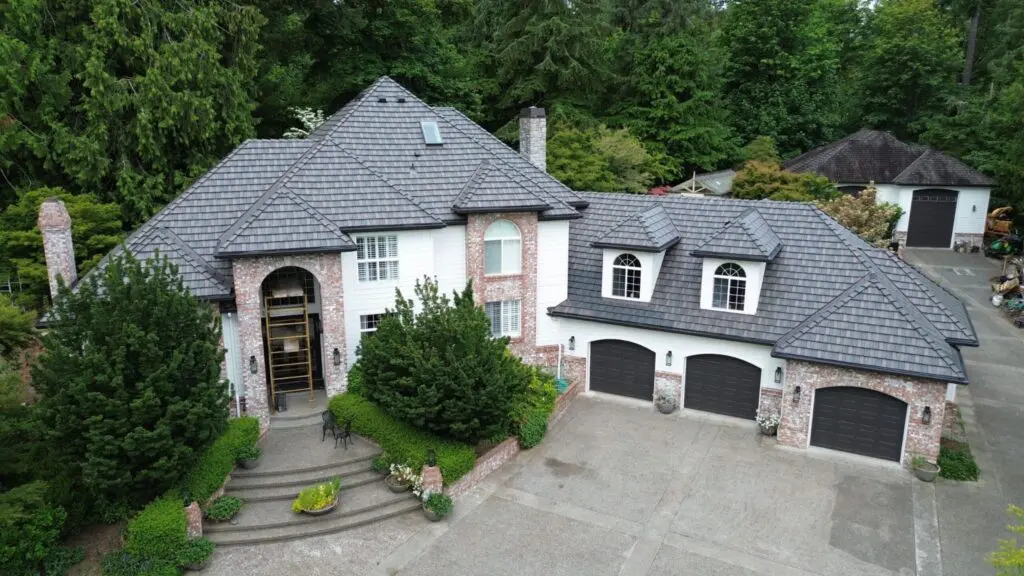
4. Cedar Shakes
There is no denying it: a fresh cedar shake roof is stunning. It’s the quintessential “Northwest Look”: that silver-gray weathered charm that makes a home look as if it grew right out of the forest. Cedar has been a staple in Washington and Oregon for over a century, and for a long time, it was the gold standard for high-end homes because of its natural oils and impressive insulation properties.
But here’s the truth from those of us who spend our days on top of roofs:
- Nature Wants it Back: Cedar is organic. While that’s great for the environment, it’s a challenge in a climate that gets 40+ inches of rain a year. Without constant airflow and sunlight, cedar shakes stay damp. In the PNW, “damp” is just another word for “moss food.” If you don’t stay on top of it, moss and lichen will root into the grain, hold even more moisture against the wood, and eventually turn your expensive roof into a garden.
- The Maintenance Marathon: Unlike metal or even asphalt, you can’t just “set it and forget it” with cedar. To keep it from warping, splitting, or rotting, it needs to be professionally cleaned and treated with preservatives every few years. Skip a couple of cycles, and you’ll see the shakes start to “cup” and “curl,” which creates perfect little entry points for leaks.
- The Fire Factor: This is the big one. With our summers getting hotter and drier, fire resistance is top of mind. Many counties in the PNW have updated their building codes regarding wood roofs. Unless the shakes are pressure-treated with expensive fire retardants, they can be a liability in fire-prone areas, and your insurance company might have something to say about it, too.
Is the Curb Appeal Worth the Chore?
We love the look of cedar, and for certain historic restorations, nothing else will do. It offers fantastic natural insulation, keeping your attic cooler in the summer and warmer in the winter. But we always have a “real talk” conversation with homeowners who are considering it.
The Mountaintop Metal Roofing Difference
At Mountaintop Metal Roofing, we’ve seen too many Pacific Northwest homeowners stuck in a cycle of “re-roofing every 15 years.” Most of the industry relies on products with short lifespans and speed-focused installations. We chose a different route.
Lifetime Protection
We specialize in metal roofing services that are built to last a lifetime. All our products are backed by a lifetime, non-prorated, transferable warranty. We believe you should do it once, do it right, and never worry about your roof again.
Expert Installation & Communication
A roof is only as good as its installation. Our experienced professionals focus on:
- Safety: Our crews are always tied off, protecting both themselves and your property.
- Quality: We ensure every detail is watertight, using the best materials and latest techniques.
- Cleanliness: We clean up at the end of every day. You should see a beautiful new roof, not a construction site.
We pride ourselves on transparent communication. From the initial meeting to the final walkthrough, you are informed every step of the way. We even hold coordination meetings between sales and installation teams to ensure no detail of your project is missed.
Ready to protect your home forever? Contact Mountaintop Metal Roofing today for a consultation on our premium metal roofing products.
Frequently Asked Questions
Is a metal roof too noisy during PNW rainstorms?
With modern insulation and solid roof decking, metal roofs are no noisier than asphalt shingles. The “drumming” sound people associate with metal usually only happens on open-frame structures like barns or sheds.
How do I prevent moss from growing on my PNW roof?
Moss thrives on moisture and organic material. To prevent it, keep your roof clear of debris (like pine needles) and choose a non-porous material like metal. If you have asphalt, you may need annual zinc or copper treatments.
Can a new metal roof be installed over my old shingles?
In many cases, yes! This is called an overlay or re-roof. Metal roofing is lightweight, and depending on local building codes and the condition of your roof deck, it can often be installed directly over existing asphalt, saving you money on tear-off costs.
Why is aluminum better than steel for coastal PNW homes?
Aluminum does not rust. For homes near the Puget Sound or the coast, aluminum is the best choice because it withstands the salt air and high moisture levels without corroding.