
Key Takeaways
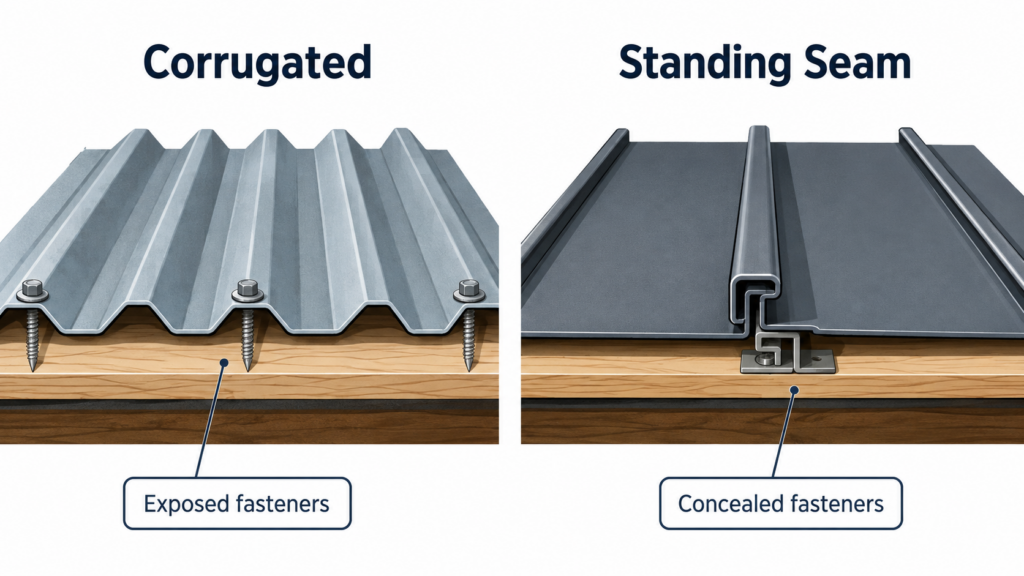
- Corrugated roofing uses exposed fasteners (screws driven straight through the metal panel face). Standing seam uses concealed fasteners (clips hidden beneath interlocking vertical ribs).
- Standing seam is the gold standard for leak prevention. Because no screws pierce the metal panels, there are zero penetration points for rain or snow to exploit.
- Corrugated metal is roughly half the cost of standing seam upfront. However, standing seam lasts twice as long (50–75+ years) and requires virtually zero maintenance.
- Standing seam offers a sleek, modern architectural line but can be prone to “oil canning” (minor cosmetic wrinkling). Corrugated’s wavy pattern naturally hides these wrinkles but has a more rustic or industrial look.
- Standing seam can be installed on very low-slope roofs, whereas corrugated metal requires a steeper pitch to ensure proper water runoff.
If you have decided to upgrade your home to a metal roof, you’ve already made an excellent choice for your property’s equity, durability, and energy efficiency. But as you begin looking at options, you will quickly hit a major fork in the road: Corrugated Metal vs. Standing Seam.
While both are exceptional upgrades compared to standard architectural asphalt shingles, they are entirely different systems. They look different, cost different, and perform very differently under harsh weather conditions. To help you make an informed decision for your home, let’s peel back the layers and look at the real-world pros and cons of each system.
Corrugated Metal Roofing
To understand corrugated roofing, think of a classic rippled or wavy pattern. These alternating ridges and grooves actually give thin sheet metal its structural strength and stiffness. When installing a corrugated roof, the metal sheets overlap at their edges, and an installer drives self-tapping screws straight through the face of the panel into the wooden roof deck below.
Each of these exposed screws uses a small rubber washer (neoprene or EPDM) to seal the hole.
The Pros of Corrugated Metal
The Lowest Price Tag
Corrugated panels are the most economical metal option on the market. If you want the longevity of metal but have a tighter budget, corrugated generally costs about 50% less than standing seam.
Easier, Faster Installation
Because these panels are screwed down flat and overlap simply, the installation requires less specialized machinery and labor.
Hides Visual Imperfections
Metal panels naturally expand and contract in the sun, which can cause a visual waviness called “oil canning.” Because corrugated metal is already wavy, it beautifully masks this cosmetic shifting.
The Cons of Corrugated Metal
Thousands of Potential Leak Points
This is the primary drawback. A standard corrugated residential roof requires thousands of screws driven through the panel face. Over time, thermal cycling causes these screw holes to expand slightly, and the rubber washers degrade under constant sun exposure.
Required Maintenance
Because those fasteners are exposed to the elements, they are a long-term liability. Homeowners must routinely check, tighten, and eventually re-seal or replace the fasteners every 10 to 15 years to prevent hidden water damage.
Roof Slope Limits
Corrugated metal cannot be safely installed on low-slope or flatter roofs; it requires a minimum pitch of 3:12 to ensure heavy rain sheds effectively.

Standing Seam Metal Roofing
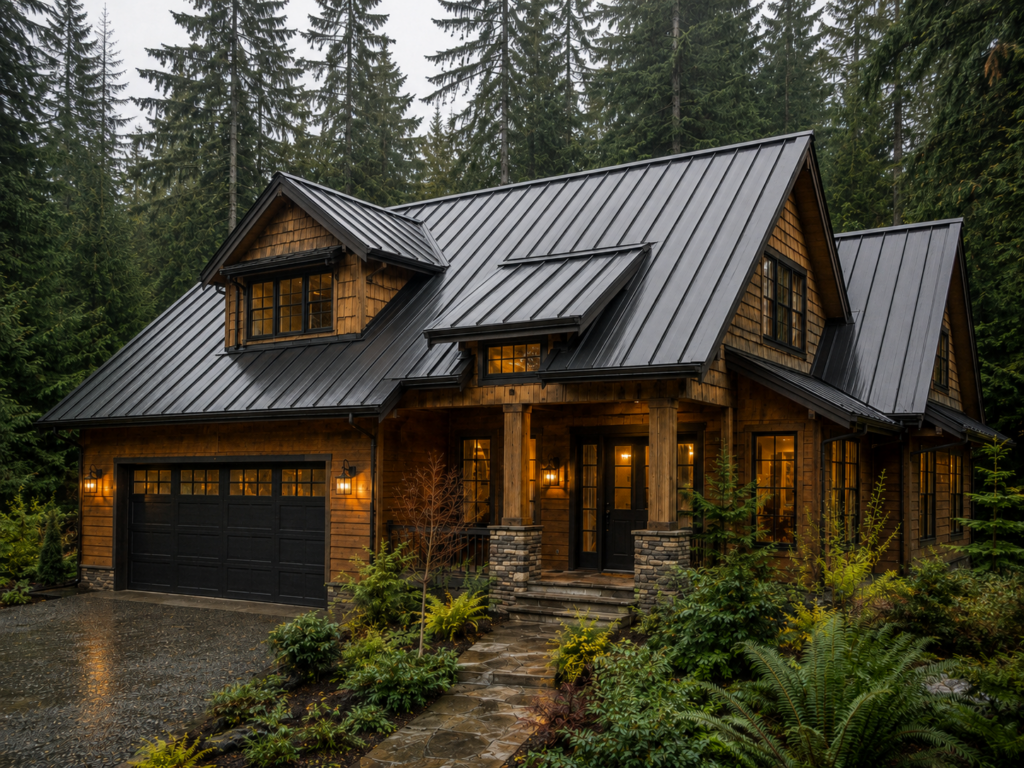
Standing seam is a concealed-fastener roof system. The panels feature wide, flat metal surfaces with distinct vertical legs or ribs on each edge. During installation, the panels are fastened to the roof deck using hidden clips tucked underneath the vertical legs. The adjacent panel then snaps or is mechanically seamed right over the top of the clip, locking the panels together. No screws ever pierce the face of the metal.
The Pros of Standing Seam
Virtually Leak-Proof
Eliminating exposed fasteners means you eliminate the single most common cause of metal roof failures. The continuous, interlocking surface provides unmatched weather tightness.
Decades of Longevity
Because the hidden clip system allows the metal panels to glide smoothly as they expand and contract with the weather, the roof undergoes zero structural stress. A properly installed standing seam roof easily lasts 50 to 75+ years.
Sleek, Modern Aesthetics
Most contemporary architects and homeowners prefer the crisp, clean lines of standing seam. It instantly modernizes a home’s exterior.

Solar and Accessory Friendly
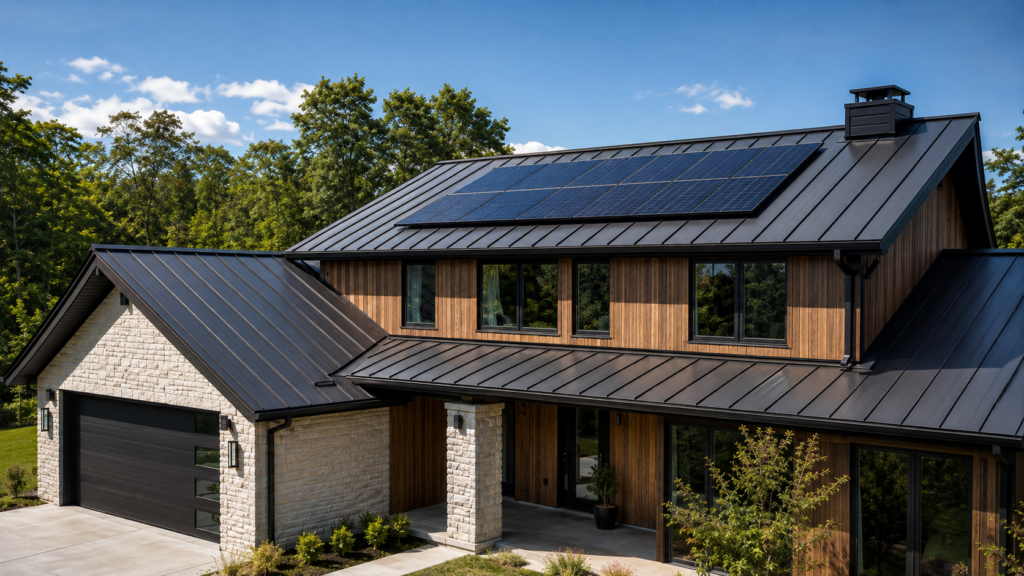
If you plan to add solar panels, standing seam legs are incredibly convenient. Specialized clamps lock straight onto the vertical ribs, allowing solar integration without drilling a single hole into your roof.
The Cons of Standing Seam
High Initial Investment
Standing seam is a premium product. Between the thicker gauge metal (typically 22 to 24-gauge compared to corrugated’s thinner 26 to 29-gauge) and the precise engineering required, it can cost twice as much as a corrugated roof.
Complex Installation
Installing a standing seam system requires specialized tools, custom flashing work, and highly trained roofers.
A Side-by-Side Comparison
| Feature | Corrugated Metal | Standing Seam |
| Fastener Style | Exposed (Screws pierce panel) | Concealed (Clips under seam) |
| Average Lifespan | 25 – 40 Years | 50 – 75+ Years |
| Upfront Cost | $ (Budget-Friendly) | $$$ (Higher Investment) |
| Maintenance Need | Moderate (Check/replace screws) | Very Low |
| Minimum Roof Slope | 3:12 Pitch | 1:12 Pitch (with sealant) |
We’re Here to Help You Choose a Permanent Roof for Your Home
Corrugated metal is fantastic for a backyard workshop or a detached garage. But when it comes to the roof over your family’s head, your primary home deserves a permanent, leak-proof solution. That’s why we specialize exclusively in premium, concealed-fastener systems that hide the screws under interlocking panels, eliminating leaks and maintenance headaches completely.
When you partner with Mountaintop, you get true craftsmanship from a team that thoroughly inspects your roof deck, installs heavy-duty underlayments with smooth slip sheets for safe thermal movement, and backs everything with a lifetime, non-prorated, transferable warranty.
Ready to find the permanent, leak-proof roofing solution your home deserves? Browse our premium metal roofing products or contact Mountaintop Metal Roofing today for a free estimate.
Frequently Asked Questions
Will a corrugated metal roof leak sooner than a standing seam roof?
Yes, historically, corrugated roofs have carried a higher risk of leaks over time. Because thousands of screws pierce the face of corrugated panels, the rubber washers are constantly exposed to weather and UV degradation. If these fasteners aren’t maintained, water will eventually find its way into your roof decking. Standing seam avoids this issue entirely by keeping all fasteners hidden.
Can you walk on a standing seam metal roof?
Yes, but you should always do so with care. Standing seam panels are typically made of thicker metal (22 to 24-gauge) than corrugated panels, making them strong enough to walk on. However, wearing soft-soled shoes and walking flat-footed is recommended to prevent scratching the protective finish or causing minor cosmetic dents.
Why does standing seam cost so much more than corrugated metal?
The cost difference comes down to raw materials and installation expertise. Standing seam uses heavier, thicker-gauge metal panels. Additionally, the installation process requires roll-forming machines, detailed clip systems, and a much higher level of craftsmanship to ensure the panels interlock flawlessly.
Which option is better if I want to install solar panels later?
Standing seam is the undisputed winner for solar integration. Because of its raised vertical legs, solar installers can use specialized S-5! Clamps to mount solar racks directly to the seams without drilling into your roof. But remember, mounting solar panels on a corrugated roof requires drilling additional holes in the metal face, increasing the risk of future leaks.